Showing posts with label coordination. Show all posts

Wednesday, August 30, 2017

Yukata Coordination App for iPhone Review - 浴衣合わせ

App Name: 浴衣合わせ (Yukata Coordination)
Creator: Sanyo Co, Ltd.

Screenshots

Coordination page
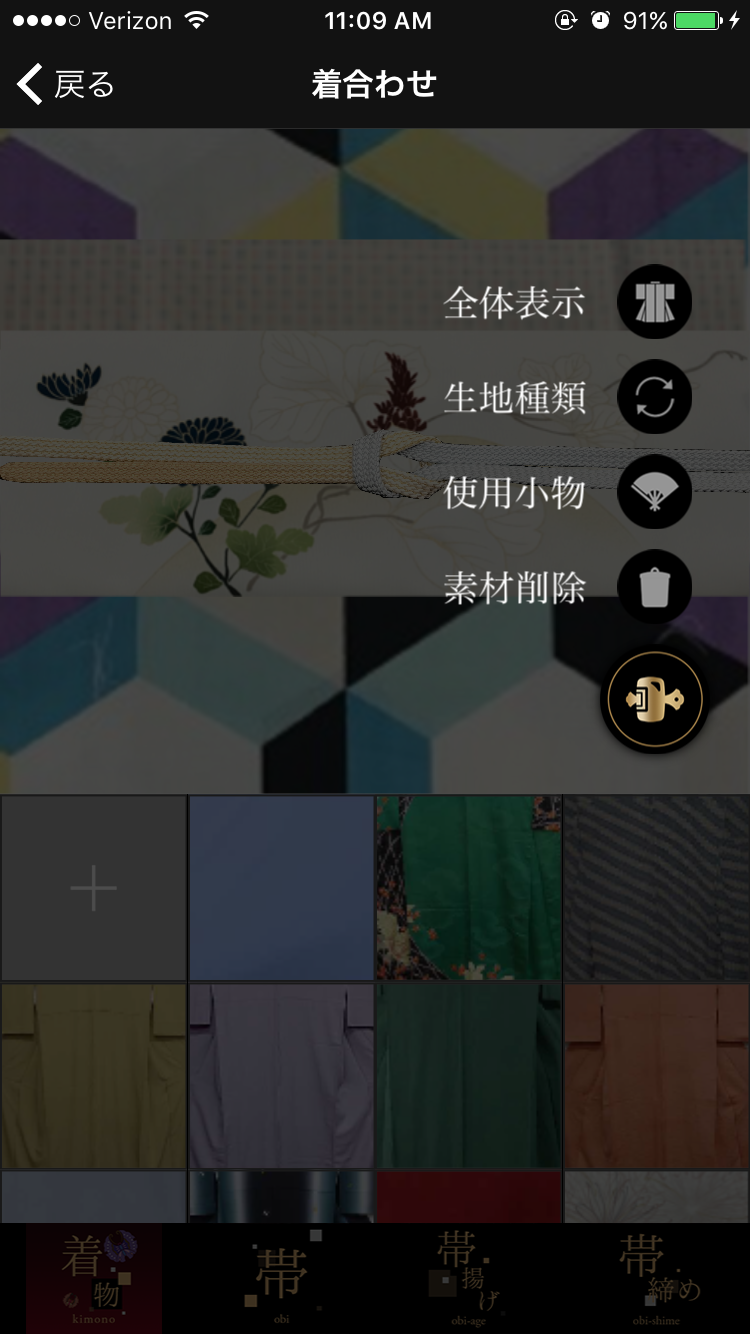
Options
1. Completed coordination
2. Purchase items (sample items may be available for sale)
3. Delete images (only those you've added)
Completed look

The yukata coordination app is basically a lite version of the kimono coordination app, so most of the pros and cons are the same. There aren't as many pages or options, so if all you want is to see how an obi/kimono combination will look, this might be the better app regardless of whether or not you are trying to coordinate yukata or more formal items.

Pros
  • Able to see items in kimono silhouette
  • Can save completed looks to phone
  • Free
  • Mostly self-explanatory and some English so little to no Japanese language is required for coordination functions
Cons
  • Slow to load
  • High res pictures needed for the best final images
  • Shading on completed looks can distort colors
  • Can't delete sample coordination items (can actually buy some of these from the app)
  • Can be too easy to accidentally delete your items
  • Can't coordinate accessories

Kimono Coordination App for iPhone Review - 着物帯合わせ

App Name: 着物帯合わせ (Kimono-Obi Coordination)
Creator: Sanyo Co, Ltd.

Screenshots
Landing page
Coordination page
Options on coordination page:
1. See completed look
2. Change season (can choose awase/hitoe and usumono)
3. Purchase items in app
4. Delete images (only ones you've added)
Dressing Sample page
Convenient Book page 
Completed look

This app (and its complimentary yukata coordination app) is the only kimono coordination app I've been able to find so far for the iPhone. The app takes some time to load, especially the first time. It crashed on me several times until I just let it run for a little while and let it load all of the images. There are three main pages you can access from the title screen - the coordination page, the dressing sample page, and the "convenient book" page. The coordination page is the main feature and allows you to upload your own images (or use their provided ones, often items for sale) to compare kimono, obi, obiage, and obijime. Just select a swatch for each section, and it will add it to the image. Options can be selected by clicking the little hammer in the bottom right corner of the image. Selecting the kimono image will let you see the completed look. The next option allows you to change the season (can choose awase/hitoe and usumono). The third option (the fan) links you to items in app that can be purchased. The trash can allows you to delete images that you have added. I found that you need to be careful with the delete function because it can be easy to accidentally delete the wrong item, and you need to reselect delete to go back to coordinating. You also can't add any other accessories, so haneri, obidome, etc. are out.

Pressing a plus sign on page will allow you to upload an image of that item from your phone's pictures (for example, clicking on the obi page and then the plus sign will allow you to upload a picture of an obi in your collection). Each section will crop the image differently to fit that type of item. You'll probably need to play around with it to figure out which size/resolution images will work. I found that higher res images are really needed to get the best final results. As far as how different kimono types display, I was able to adequately show the kimono for several different formalities (houmongi, iromuji, komon, etc.). You can't change the sleeve length on the final image, so furisode will show up like houmongi, but for coordination purposes, it should be sufficient.

As for the other pages, the dressing sample page shows you pictures (real life and from the app) to give you inspiration. You can add your own coordinations by selecting the plus sign. The "convenient book" page has information about TPO, seasonality, etc., but it is very short and all in Japanese, so I found this to be less helpful.

In conclusion, this app will definitely work if you want a quick check on an ensemble you're planning, but don't expect any high quality images or advanced functions.


Here's the TL;DR pros and cons of this app:

Pros
  • Able to see items in kimono silhouette
  • Can save completed looks to phone
  • Free
  • Mostly self-explanatory and some English so little to no Japanese language is required for coordination functions
Cons
  • Slow to load
  • Japanese only on "convenient book" pages
  • High res pictures needed for the best final images
  • Shading on completed looks can distort colors
  • Obijime looks awful unless using their provided images
  • Can't delete sample coordination items (can actually buy some of these from the app)
  • Can be too easy to accidentally delete your items
  • Can't coordinate haneri, obidome, or other accessories

Thursday, June 15, 2017

Handmade Kimono

For my last week of maternity leave, I really wanted to finish a sewing project. I bought the fabric for this kimono a long time ago, but I have only gotten around to making it now because the baby has started going to daycare. So here's the finished product (the color is most accurate in the close-up photos). It's a cotton-linen blend with white flower embroidery. I did a casual pairing with a hanhaba obi just for picture purposes. The obi is tied in 二色鼓結び (futairo tsuzumi musubi).

Friday, June 2, 2017

Yukata for Belated Gofuku no Hi 2017

I missed Gofuku no Hi since I was out of town and sick (still sick though), so here's my super late contribution! This townscape yukata arrived today so I paired it with a reversible red and black kingyo hanhaba obi. This musubi required an obijime, so I used a green and white checkerboard sanbuhimo with a silver dragonfly obidome.

Wednesday, May 10, 2017

Pink Hakama Kitsuke

Quick post for today: pink hakama kitsuke! I used my blue baby duck haneri with this deep purple butterfly komon and a light yellow hanhaba obi.


Thursday, May 4, 2017

Kodomo no Hi (こどもの日) 2017

I put together this ensemble in honor of kodomo no hi (こどもの日) tomorrow. The kimono is pink cotton seersucker, and I made the matching hanhaba obi and haneri out of cotton nursery fabric with a pattern of baby ducks. It's a rather lightweight ensemble, but our weather has been around 80 degrees F (about 27 degrees C) for the past few weeks. This was also my first time doing musubi with a sanjuuhimo, but I'm happy with the result!


Friday, April 7, 2017

Hydrangea Yukata and Too Small Heko Obi

Today's kitsuke was a lesson in problem solving! I ordered a heko obi for this yukata, and the dimensions were listed incorrectly. Instead of the adult size that was listed, I received a child's size... It was a good buy so I figured it was not worth returning. At first I thought I might just use it as a puchi-heko obi or even for fabric, but then I decided to see if I could find a way to tie it. One of my favorite books (ファブリック帯の本) has many ways to tie heko obi, including using long scarves, so I modeled it after those musubi. I also used a hanhaba obi tying tool (kind of like biyosugata but for hanhaba) to help provide support. I hope you like it!


Thursday, April 6, 2017

First Postpartum Kitsuke - Spring Edition

After just having a baby, I can't really do kitsuke on myself, so out comes the trusty sewing mannequin! I got this cotton kimono and obi fairly recently and was dying to see them together. I tried to use colors in the obi for this ensemble to help keep the spring look, since an orange kimono could easily lean toward autumn.


Monday, January 23, 2017

30 Weeks Pregnant Kitsuke

For most of my pregnancy, I have avoided doing any kitsuke - even for practice. With hormones making me generally not feel well for a good amount of the time and (of course) an ever-changing body to deal with, it just felt like too much. However, this past weekend, I had a good reason to try to get dressed in kimono. It was the annual local Japanese food event, "Oishii Japan", and my tea ceremony group was asked to do a short presentation. The outfit I ultimately ended up choosing was not something I would usually wear for tea, but I went with it considering it was a casual event, and I had a limited number of things that still fit and would be comfortable enough. 


Wednesday, December 28, 2016

2016 Recap

I apologize for the long hiatus on this blog. 2016 was a pretty bad year for me kimono-wise just because I didn't have the ability (surgery and really rough 1st trimester of pregnancy) or the opportunity to wear them as much as I would have liked. I made a small collage of the outfits I wore or styled.


The most pervasive theme I notice is that I focused more strongly on casual outfits. Cottons and tsumugi were favorites, and bold obiage were used to make the kimono more youthful and modern. There were a few colored haneri and tabi uses early in the year, but since most of the later occasions were more formal or for tea ceremony practice, I stuck with mostly white. As usual, I pretty much stayed away from vintage and kimono hime. (They look great on many people, but just not on me!) The loudest outfit by far was the playing card yukata that I styled for a fashion show in July. It really can't be seen in the photo, but there is a small silver dice obikazari, and the obidome is a roulette wheel. The last kimono I wore this year was a blue shibori hitoe kimono for a shamisen performance. Technically, it's a pregnancy kitsuke since I was 13 weeks at the time, but I wasn't really showing then so fitting was essentially the same.

Unfortunately, I don't see myself posting too frequently in the coming year as well due to having a baby on the way. I hope to have at least one pregnancy kitsuke to show before it's all over though. And who knows? Maybe I'll have some cute baby kitsuke in the future in addition to my own!

Thursday, June 30, 2016

June Chanoyu Okeiko Weekend

I got a lot of practice for tea ceremony last weekend! We had a big group class on Saturday, and then I had a private lesson on Sunday.

Saturday's outfit: 
Pink ro komon with kikyou, cream Nagoya obi with hyotan, purple summer obijime, mint summer obiage, summer zori from Calen Blosso


Saturday, May 28, 2016

Casual Hitoe Tsumugi Ensemble

Today, I met with a friend for tea, so I chose casual ensemble: a grey striped tsumugi hitoe with summer accessories. It's already hot enough for full ro/sha here, but I decided to stick slightly closer to the traditional calendar by continuing to wear hitoe today. Despite the heat and humidity being so high, this kimono kept me pretty cool!

Friday, April 1, 2016

Zelda Symphony Ensemble

My husband and I went to the Orpheum last night to see the Zelda: Symphony of the Goddesses show last night. I wanted to wear a more formal ensemble, so I finally had an opportunity to wear this yellow crestless irotomesode that I bought last year. It also gave me a chance to wear the new haori I bought recently. I chose a royal blue obiage for a pop of color. The obi I got recently from eBay. It's a cream-based taiko-gara fukuro obi with lavender and blue karabana. The sanbuhimo is light pink with silver threads. The obidome is handmade with items from the craftstore. The camera unfortunately did not pick up the true vividness of the colors.

Tuesday, March 29, 2016

Belated Post - Birthday Kitsuke

I did this coordination about a month ago, but forgot to post it here. I decided to do a coordination for my birthday, and I chose to use several new items. The beige kimono (one of my "bucket list" kimono!) is a cotton-linen blend and is so comfortable! The obi has big peonies that remind me of a Georgia O'Keeffe painting. I chose turquoise accessories for this particular coordination, but I think it would be a match for other colors as well. The obi is tied in tsunodashi musubi, and since the obi has no core, it's a little more curved than I would like, but oh well. 


wink emoticon

Saturday, October 31, 2015

Coordination for Halloween Tea Ceremony Class

In keeping with the spirit of Halloween, I wanted to wear kimono with the traditional colors to tea ceremony class. I didn't want it to look too out of place, so I wore my orange iromuji, the black and grey bokashi nagoya obi, a deep purple obiage, and a bright green obijime.

Tuesday, September 15, 2015

Giving Life to Old Obi

For years, I have had these two tsukuri obi just sitting in my house. I bought them both for very little. The first is a rough brown one - likely cotton - and the other is a synthetic one with printed kanoko dots. They are plain and versatile, but pretty boring... I had an idea quite a long time ago to add appliqués, but I truly kept forgetting about it. While moving thing around the other day, I finally remember that idea. I found several cute designs, but the little orange and yellow owls were my favorite. I also picked up some flower appliqués of varying designs. These appliqués are iron-on type,

And these are the results!

Brown cotton obi with owl and flower appliqués

Tuesday, June 23, 2015

KdJ Memphis, June 2015: Jun Kaneko Exhibit

This past Thursday, my husband, my friend Shay, and I went to see the work of Jun Kaneko at the Dixon Gallery and Gardens for our Kimono de Jack Memphis outing. Shay and I both work kimono, of course!

She wore her lovely vintage hitoe komon and borrowed an obi and komono from my collection. If that kimono were larger, I'd definitely steal it! The pictures don't do it justice. 

My ensemble was a black ro komon with a whirlpool and zakuro (pomegranate) design. The obi is cream colored ro with a lantern (or a case could be made for moon) design. Both of us opted for cool blue accessories. Shay was much more modern with her styling, and as usual, I stuck to a more classical kitsuke.

Saturday, June 6, 2015

June Kitsuke - Blue Cotton Komon

I had to help my sister run her booth at a comic book expo today, so I decided to wear this cotton komon that has been sitting in storage for some time. When I purchased it, the seller advertised it as a yukata. It is likely cotton, but much softer than any yukata. It also has hiro eri (wide collar that must be folded for wear). It is not sheer like sha or ro, but not as opaque as regular hitoe. Since the traditional calendar says that you don't switch to ro and sha until at least June 15, it really is the perfect "in-between" kimono.